
PROLOGUE
SOLUTIONS OVER COMPLAINTS
THE ROAD LESS TRAVELED
WHAT THIS BOOK ISN’T ABOUT: COMPLAINING
WHAT THIS BOOK IS ABOUT: SOLUTIONS
A NEW VANTAGE POINT
THE ROAD LESS TRAVELED
I will begin and end this book with a few lines of poetry from my favorite poem about taking the road less traveled. The poem was written by Robert Frost. Every time I read “The Road Not Taken” and I look back on my career and my life, I see where taking the road less traveled has benefited me. What I learned along those less-traveled roads led me to write this book. The closing lines of the poem are:
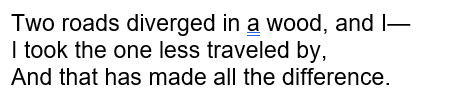
I hope in reading this book, you acquire the same inspiration to make choices you will one day look back upon and know the choices you made were the right ones—the choices that made all the difference.
WHAT THIS BOOK ISN’T ABOUT: COMPLAINING
Speaking of roads less traveled, this is not a book of complaining. The road most traveled is complaining. The road less traveled is seeking solutions. There’s no need to devote this book to repeating data from research projects, countless articles, books, quotes and opinions explaining the shortfalls of broadcast journalism. It’s easy to complain. It’s much harder to offer real, practical solutions to restore the stature of journalism with the citizens of our American democracy. In this age of antagonism toward the press along with the rise of fake news and the mystery of alternative facts or selective truths, the journalism world is under attack and collapsing. Journalists find themselves impotent to fight back and appalled that no one understands them. The broadcast journalism world has been beaten down, weakened and emasculated for decades by the relentless pressure for profits by the private holding companies and soul-destroying corporations that have overtaken the industry. Now, broadcast journalism is an industry that produces a soulless, cheap, devalued product in the eyes of the American consumer. The deterioration of the content and the estrangement from the public has gotten so bad that any efforts to rally the American people to rally behind broadcast journalism and cheer its efforts, fall on the deaf ears of a consumer who lost interest long ago. The American public simply does not care. The public feels misled by a conglomeration of what they generically call “the media” that they feel is out of touch and does not serve their interests or values. The media world, as they know it, is no value to them and is not worth saving. And that is very scary. Many years ago I saw an ad for a t-shirt on social media that read “Rope. Tree. Journalist. Some Assembly Required” I wondered aloud how and why we journalists let our profession lose its valued role in our democracy. Yes, all of the fault for this loss of reputation lies with us journalists.
The problem? No one seems to be leading the way out of this hellhole of humiliation. We just keep sinking with every attack. And the public is quick to pile on and cheer our defeats. And sadly, the bulwark of journalism values built by those who came before us continues to weaken exponentially. We absorb the piercing arrows of criticism fired at us and we are slowly bleeding to death. And we complain. And complain. And complain. We are horrified that no one sees or understands what’s going on. And as much as we continue to complain amongst ourselves, no one is offering real, practical solutions to rebuild the bulwark, to realize we need to strengthen our armor. No one is offering a way to bring salvation, revival and reform to our industry. We are running around like cats in different directions expecting to be herded down the correct path. You can’t herd cats.
There is no better time for this message than right now because broadcast journalism needs a road map—a guide for change—to get out of this mess. The liberal public—who have long looked down their nose at broadcast journalism—are looking to us for the first time in a long while because they want us to challenge abuses of power. Conservatives—who have also looked down their nose at us—are looking to us for the first time in a long while because they want us to distinguish ourselves from the national media and tell the story of the silent majority who want their voices heard. However, we should not be the instruments of either. We are not the marketing firms for viewpoints. Journalists are the conduits of truth to a public who must make up their own mind.
However, broadcast journalists can’t do what journalists do—reveal information, hold the powerful accountable or be a voice for the voiceless—effectively, unless they first develop and share a set of values the public that resonate with the public. I learned a long time ago that consumers will not consume a product unless they attach a value to it. Think about it. Why do you choose your favorite, car, restaurant, smart phone, or clothing? It’s because you have attached a value to it. The public requires this of journalists too.
This book offers one road map—six values a journalist needs to survive in broadcast journalism and bring salvation, revival and reform to the broadcast news industry and strengthen our democracy. This book is an effort to rebuild broadcast journalism into a defensible bulwark that is a strong bastion, proudly providing its role in protecting this democracy. This book is solution-oriented, not complaint-oriented.
Chapter 1 expresses the need for a true faith in journalism. If you want to be a successful journalist, you need to really believe in journalism—its purpose, its value, and in what it can do. Maybe you’ve been fortunate enough to develop a strong faith in a person, an institution, a company or a religious faith. Consider yourself fortunate to know what that feels like. Maybe you’ve never believed in anything and need of a kernel of faith that can grow and blossom. I want to make the case that changes in our industry cannot happen unless journalists begin to really start believing—and develop a deep faith—in the power of journalism.
Chapter 2 explains the idealism of journalism. If you’ve never had any ideals, then let me provide some that are tried and true from journalists who paved the way for us. I’ll give you some easy-to-remember journalistic and ethical tools. You might notice, I said tools and not rules. There are no rules in journalism, only ethics. I’ve found that it’s easier to teach simple decision-making tools that will enable someone to develop their own ideals and enable someone to make ethical decisions on their own. Tools are better than rules.
Chapter 3 might be a big wakeup call for you when you find out who is really running the journalism business in our country. A hint—you won’t find many idealistic journalists at the top of most of our largest media companies. This chapter provides you with some insight into the business of broadcast journalism. You will also emerge from this chapter knowing how to analyze the leadership of your newsroom, your station and your company. I hope you will acquire some insight to assess your own leadership potential too. Without seeing the big picture, without insight into how our business works, and without understanding how organizations and leadership can evolve, you can become discouraged and frustrated and your career in journalism can fade quickly. You might become what I call a “casualty of the business.” A casualty of the business is someone who abandons journalism for a myriad of reasons but mostly because of the low pay and crippling disillusionment. I hope once you are armed with some insight into how our business works, you will know how to play the game until you change the game and most importantly, stay in the game.
Chapter 4, on practicality, is where the rubber hits the road. We look at how to take your faith, idealism, and insight and make them practical in your everyday work life and your personal life. This chapter is where you learn how to learn, share and preach the gospel of journalism. You will learn a very basic business and management concept and how to apply it to broadcast journalism—the concept of internal/external marketing. I’ll explain how you must market journalism to your newsroom before you can market journalism to the public. And yes, you can market journalism to the public. I’ll explain a way to do it and why marketing journalism—internally and externally—is the single most important task required for the success of journalism and our democracy. This chapter explains how to save the soul of individual journalists and the soul of journalism.
In chapter 5, it’s time to develop a personal action plan. We will look at specific ways anyone associated with broadcast journalism—from CEOs to the general public—can begin taking action immediately. The effect of making just one step forward in the right direction can be life changing. In this chapter, I will encourage you that it’s time to preach the gospel of journalism, time to become a humble student of journalism, time to function as an ambassador for journalism, time to understand journalism’s important role in our democracy.
Chapter 6 provides you with some hope so you don’t lose hope. Many journalists have sounded the alarm and continue to sound the alarm to keep journalism on the right track. These are journalists—including this one—who care, who haven’t given up, who still have faith in journalism, who hope for a better future and who hope for a better democracy and a better world. Without hope, one cannot develop the persevering heart it will take to preach the gospel of journalism and be a part of the salvation, revival and reform of broadcast journalism.
The secret to real success—changing the game—isn’t rocket science. The concepts and ideas I’ll pass along to you in this book are hardly original concepts. But many management science techniques are new to local television. Why? Local television didn’t have to be managed well because for decades a TV station was a license to print money. In the beginnings of our industry, local television was a small business and mostly family- and locally-owned. It took a few decades but Wall Street discovered those huge profit margins and large corporations began to slowly gobble up as many TV stations as they could get their hands on. Gradually, since the 1980’s, broadcast journalism became a Wall Street commodity like washing machines and jet engines. Corporations began to show less regard for the importance of broadcast journalism to the democracy and more regard for the high profit margins. Then, when increased competition caused dwindling audiences and profits, broadcast executives focused on the numbers instead of the product. They thought short-term and not long-term. Television was so poorly managed it couldn’t adapt quickly to the changing economic environments. In this toxic environment, these corporations didn’t know much about the journalism product but they sure knew how to cut costs to maintain the profit margins. The result? We’ve been operating in such a strict mode of cost control for so long that it’s hard to think outside the box especially if you don’t feel like you are in the box to begin with. It’s a shame we can’t think big and bold. Instead, we settle for small and timid. And our democracy has suffered. The extreme cost control measures across our industry produced a national standard of weak competitors that have left our country underserved. The cry from corporations to maintain fat profit margins led to the gradual deregulation of the industry. In the 1970’s a company could only own seven TV stations. Today, two companies each own around two hundred stations. And deregulation will only continue. The danger of one person or company taking over the free airwaves and dominating political thought has fallen on deaf ears.
It’s my belief that most professionals in the broadcast news industry not only fail to recognize what the industry is doing to itself and our country but also fail to recognize what the industry could be doing for itself and our country. I say “most professionals” fail to recognize the damage being done, but there are many who do know the damage being done to broadcast journalism and simply do not care. I hope many will—after reading this book—recognize the damage being done and see the light. And if these broadcast journalists see the light, I pray they are inspired to take action to do something, anything, to get our industry refocused.
What could our industry be doing? When you think about what journalists do—reveal information, hold the powerful accountable and be a voice for the voiceless—there are not enough reporters on the street to provide those essential services to our communities. Think right now about your own communities. When was the last time you heard a beat reporter report on the water quality in your lakes, your streams, your water supply? When was the last time you saw a tenured journalist challenge a mayor or governor on their leadership on education? When was the last time any local school boards, city councils, state agencies or state universities had an experienced reporter take a detailed look at their budgets? When was the last time you heard about any local investigations by a reporter involving requests for open documents tracing how the public’s money is being spent with any public agency? When was the last time you saw a reporter examine affordable housing for the poor in your city?
Clearly, when a station has a maximum of one reporter on the early morning shift, 2-3 reporters on the day shift and 1-2 reporters on the evening shift and one reporter on the weekends, these reporters are covering little more than breaking news and planned events. The scale of investigations, oversight, and advocacy needed to serve the people, inform the public and protect our democracy isn’t happening. And because our industry no longer embodies the ideals of journalism, we no longer attract the best and the brightest. We struggle to attract the young and idealistic to the noble cause of journalism Young people aren’t be taught journalism is a cornerstone of our democracy. Nor do newsrooms take the time to remind their staff. Our democracy is hurting because our newsrooms are hurting. While we may not attract the best and brightest, we do, thankfully, attract the most passionate—those who understand the intrinsic value of being a journalist.
WHAT THIS BOOK IS ABOUT: SOLUTIONS
Let’s think big and bold. The purpose of this book is to empower journalists to be a part of repairing the broadcast journalism industry and how those efforts might help our country and our democracy. Since changes in our industry—meaning increases in newsroom budgets and staffing—aren’t about to happen any time soon, we must strive as individuals to learn how to bring about change in our current environment. Each one of us must be smarter. We must be innovative. But we’re in a deep, deep rut. We must strive with all of our might to climb out of that rut. How do we do it? We need to grab on to some of the ropes already dangling right in front of us—like journalistic idealism—and pull ourselves out. Once we start climbing out of the rut, we need to start taking action and then encourage others to grab on and start climbing out of their ruts. You’ll find many who are more comfortable staying in the rut. Leave them behind for now. You can come back for them later. Your job is to free yourself from the timidity that plagues our newsrooms and replace it with the confidence and boldness journalism provides. You might not be able to transform your newsroom right away. Transforming your newsroom is my next book. Stay tuned. But you can transform yourself starting right now.
This book really has two parts. The first three chapters are about what you need to learn. The last three chapters are about what you must do with the first three chapters. The biggest problem journalism faces today is our reputation—the public does not understand us. The public does not trust us. That’s our fault. We must fix that. We have not taken the time to really explain our job, our service, our value to the public. The public doesn’t understand journalistic standards and values because our industry never takes the time to explain them to our own newsrooms. Why should we journalists expect the public to understand and care deeply about what we do if most journalists don’t understand and care deeply about what we do? This is especially true if we don’t understand and care deeply about training the next generation of journalists. So, it’s time to try something big and bold. I believe it is possible for broadcast journalists to distinguish themselves through the internal/external marketing of journalistic values. The product you’ll be marketing internally to your staff and externally to the public is good, old-fashioned journalism. By the time you finish this book, the single, most important management concept I want you to understand is how internal/external marketing can be practically applied to broadcast journalism. I believe journalistic success can bring commercial success by creating a solid, journalistic set of standards and policies in your newsroom and then effectively marketing those values internally to a newsroom staff and externally to the public.
Successful companies are at their best when they create, maintain, and market a product that consumers value. How did Volvo distinguish itself in its marketing from all other cars? That’s easy—safety. How did Wal-Mart distinguish itself from other stores? That’s easy—low prices. How did Apple distinguish itself from its tech competitors? That’s easy—innovation. These attributes were first internal values that shaped the identity of these companies. In each case, those internal values were shared with the public and the public got it. And the product matched those expectations. Those company values became real in the lives of the consumer who consumed the products. Television stations must do the same. We must do this across the industry. Consumers must attach a value to what we do or they will not consume it. We can accomplish this the way all successful companies do it—by first establishing journalistic values internally to our staffs and then marketing those journalistic values externally to the public.
It is journalism—not you or I or any one individual or company—that will revive and purify our industry and give us the resolve to bring about a wave of change. As a news director for many years, I would say “I let journalism run the room so I don’t have to.” It’s a lot easier to lean on the tried and true tenets of journalism than for me to think up a bunch of new rules based on my whims. It’s much easier to depend on the journalism values and practices that have been given to me from all those who came before me. Most newsrooms do what I call “TV news” and not real journalism. What do I mean by “TV news?” It means going through the motions every day and putting stories on the air without the practice or thought of journalistic ethics. It means just throwing the news of the day on the screen without realizing the impact on your staff, your viewers, your community or your country. Many burned out journalists call this “feeding the beast.” Broadcast journalism is a powerful tool. Stop. It’s not a beast. It’s a treasure. Pause once in a while. Think about how you do journalism. We should strive to practice our craft with responsibility to ourselves and accountability to the public.
So, what you will find in this book are simple, long-held traditions and proven concepts. These are the ropes I referred to earlier. They are right in front of you. All you have to do is grab hold of them and pull yourselves up out of the rut. As Ron Alridge, former editor of the magazine Electronic Media (now Television Week) once wrote, “Good journalism is good business.” Never forget that. Journalism must be at the top of everything—above the company, above technology, above sales, above the unions, above everything. If journalism is top of mind for everyone at your station, then everyone else—sales, engineering, marketing, accounting, production--performs at a higher level because they are a part of this wonderful service called broadcast. If everyone gets that then everyone gets the need for higher profits. That’s the part broadcast executives need to understand. As high as their profit margins are now, they could be even higher if they allowed journalism to flourish. Again, good journalism is good business—remember that! You will use that phrase very often in your change efforts.
Can the marketing of journalism values work? Why not try? What do we have to lose? What we see all over America now is a “sameness” in local television news marketing. The standard formula for news marketing is to promote teams, talent and tools. By teams, I mean the AM or PM anchors or the weather team. By talent, I mean only the on-air people and nothing about behind-the-scenes values and operations. By tools, I mean live trucks, radar and choppers. Most newsrooms try relentlessly to distinguish themselves from their competition. But I’m not talking about small distinctions like teams, talent, or tools. I’m talking about the kind of distinction that can cause monumental change. How did Alfred Ochs at the New York Times distinguish his paper during the yellow journalism wars at the turn of the century in New York? He did it by putting on their masthead “All the news that’s fit to print.” He defined the values and communicated those values internally to his staff and externally to the public. That simple step changed the paper forever and left a lasting legacy that is still viable today.
Any efforts to do better journalism and attempts to be a watchdog for the community will inevitably require more resources and more staff to gather more and better news. Persistent requests for more staff or more resources often result in puzzled looks from corporate and general managers and news directors who suddenly think that maybe you’re not as good an employee as they thought you were. Ultimately, for many in the broadcast journalism industry, self-preservation kicks in. The sameness—the mediocrity—becomes the rule and then infects the entire staff. For those of you who want to do solid journalism, there seem to be no options. Suddenly you’re faced with the truth best explained by CBS News pioneer Fred Friendly: “Because television can make so much money doing its worst, it often cannot afford to do its best.”[i]
A NEW VANTAGE POINT
I’ll be the first one to admit that during my career in the field I’ve spent many hours in a news car complaining with a co-worker about the ills of our business. But I grew tired of just complaining about what’s wrong a long, long time ago. I wanted to step up and be part of a solution. I hope you do too. I want to move our industry to action; I want to work on practical ways to make things right. How? The purpose of this book is to provide a new vantage point so one can step back and look at broadcast journalism with a richer, wiser perspective. What I want to do is give individual journalists the perspective needed to change things. Armed with a new and better perspective and easy-to-use, easy-to-understand, and easy-to-memorize tools, I hope to provide a clear mission for journalists; not just talk, but action with results.
Part of my vantage point comes from being in the broadcast journalism business for such a long time. I’m old. I have the benefit of wisdom and experience. Along the way, I had plenty of life experiences both personal and professional. I developed a deep faith in journalism and its necessary role in our democracy.
Why the title The Gospel of Journalism? When you truly believe in something, when you truly have faith in something like journalism, you have to know it, you have to live it and, I believe, preach it. Faith is complete trust in something—something often bigger than yourself. Journalism is much bigger than all of us and we must reach beyond ourselves to journalism for solutions. We must believe in what’s already there. Journalism will always be a gift from all those who came before us, who paved the way for us, who provided us with our journalistic values and ideals. We must know what it means to develop a deep faith in journalism. I learned there are similarities between a journalist and a preacher. We’ll explore those similarities later in the book.
There’s a deep chasm between real journalism and the broadcast journalism industry of today. I think that’s because we don’t preach the gospel of journalism enough or at all. It’s the gospel of journalism that can bring about salvation, revival and reform in our broadcast journalism. The term “gospel” is most often associated with New Testament Christianity, but it is simply a Greek word that means “good news.” Gospel also refers to an infallible truth or a guiding principle. Journalism means providing accurate, unbiased information to our democracy so we maintain an informed electorate. Salvation means a change of heart, a deliverance from ignorance or illusion. Revival means a renewed interest in something or to bring back something that is dead to a conscious state. Reform means to change to an improved condition. The Gospel of Journalism must make inroads into our industry so that we see effective and lasting change. If we don’t fix broadcast journalism, the young folks coming into the business will also become casualties of the business and age out like so many other great people.
How do you change your newsroom and leave a lasting legacy like Alfred Ochs did with the New York Times? There is no doubt that in some newsrooms and in some companies, you are destined to lose if you fight this battle. But know that you will be fighting for what is good and what is right. With the road map of the six values of the Gospel of Journalism, you will win even if you lose. And you will always be able to hold your head up high knowing you’ve done the right thing for a noble cause.
Once you begin to look at broadcast journalism from a different vantage point—a different understanding—you will see it differently. You will more clearly understand the gospel of journalism. But remember this important point taught to me by a former general manager of mine—you have to play the TV game until you change the TV game. You’re going to have to learn how to operate in the current economic environment before you can help change the current economic environment. You will come to find out that this will take time, dedication and perseverance. Only you can decide if you want to make the personal investment required to make broadcast journalism better. I hope the six chapters in this book give you the foundation, a game plan, a road map, or a dangling rope, so you can climb out of your rut to do something substantial and lasting in the industry and something meaningful to yourself. It’s amazing what you will be able to do with a little faith, idealism, insight, practicality, action and hope.
Another vantage point I will share along the way is what it’s like to work at a station that gets it—a station that invests in journalism and reaps great profits for doing so. When you work for a great company without having to worry about bad culture and scarce resources, you will see what it’s like to work from the high ground—the very highest vantage point—where you can see every day the greater good that journalism can accomplish by flex. I’ll share what it’s like to work for a company that takes the road less traveled.
I hope by now I have encouraged you to at least hold your head up, to down the path off in the distance where you see a fork in the road, where one path is worn down, wide and easy, and where the more intriguing path is narrow but scenic, green, inviting, even inspiring.
Let’s get started on the road less traveled.
[i] Fred Friendly, Due to Circumstances Beyond Our Control, Random House, 1967, p. xii.